
How to Find Your Personal Fashion Style Today
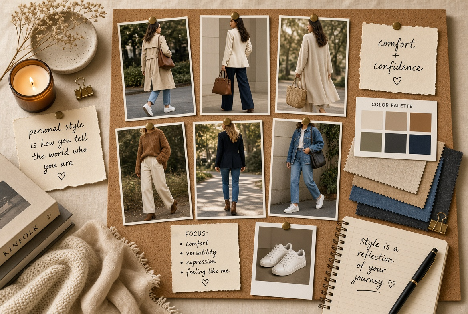
How to find your personal fashion style can feel hard when your closet contains many different clothes, colors, and trends. However, finding your style does not mean buying a whole new wardrobe. Instead, it means learning what you like, what feels comfortable, and what makes you feel confident.
Your personal style is not a fixed rule. It can change as you grow, work in new places, meet new people, or discover new interests. Therefore, you do not need to choose one fashion label and follow it forever.
Maybe you like jeans and simple T-shirts. Perhaps you enjoy dresses, bright colors, sneakers, classic shirts, or loose clothing. You might even like several styles at once.
The goal is simple: build a wardrobe that feels like you.
In this guide, you will learn how to find your personal fashion style step by step. You will also learn how to study your current closet, create a style mood board, choose colors, understand clothing shapes, test outfits, avoid common mistakes, and shop with a clear plan.
How to Find Your Personal Fashion Style by Starting With Yourself
The first step is to stop looking at what everyone else wears.
Instead, think about yourself.
Ask:
- What clothes make me feel good?
- What outfits do I wear again and again?
- What colors do I enjoy?
- Do I like loose or fitted clothes?
- Do I prefer simple or detailed outfits?
- What shoes do I wear most?
- What clothes make me feel uncomfortable?
- What outfits make me feel confident?
These questions help you notice patterns.
For example, you may discover that you always choose straight-leg jeans, white shirts, simple sneakers, and small bags. That tells you something important.
You may like a clean and simple style.
Likewise, someone who chooses long skirts, soft colors, cardigans, and simple jewelry may enjoy a softer and more classic look.
Therefore, how to find your personal fashion style starts with paying attention to your own choices.
Learn What Personal Style Really Means
Personal style is the way you use clothing, shoes, colors, accessories, hair, and other details to show your personality.
However, personal style is not the same as following fashion trends.
A trend may become popular this month. Your personal style can last for years.
For example, wide-leg jeans may be popular right now. You can wear them if you like them. Yet, you do not need to wear them simply because other people do.
Your style should answer one simple question:
“Do I like wearing this?”
That question matters more than a trend.
Furthermore, good personal style does not always mean expensive clothing. A simple outfit can look excellent when the clothes fit well and work together.
How to Find Your Personal Fashion Style Without Buying Anything
You do not need to go shopping first.
In fact, your existing wardrobe is one of the best places to start.
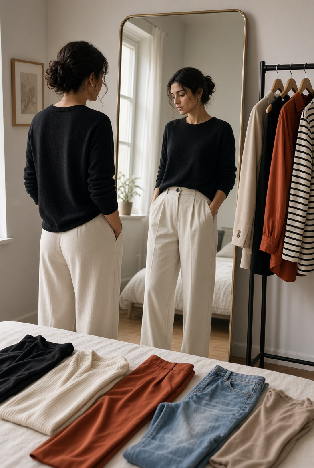
Take everything out of your closet.
Then make three groups:
Keep
Put clothes here that you love wearing.
Maybe
Put clothes here that you sometimes wear but do not feel strongly about.
Remove
Put clothes here that do not fit, feel uncomfortable, or never get worn.
Now study the Keep group.
Look for patterns.
Maybe most of your favorite clothes are:
- Black
- White
- Navy
- Denim
- Soft cotton
- Loose shirts
- Straight pants
- Simple dresses
- Sneakers
- Small accessories
Those patterns can reveal your real style.
Make a Personal Style Word List
Another useful method for how to find your personal fashion style is choosing three to five words that describe the look you want.
For example:
- Simple
- Comfortable
- Modern
- Classic
- Relaxed
Or:
- Feminine
- Soft
- Elegant
- Romantic
- Light
Or:
- Sporty
- Casual
- Fresh
- Practical
- Cool
Do not choose words because they sound fashionable.
Choose words that match the way you want to look and feel.
A useful test
Complete this sentence:
“I want my clothes to make me look and feel ______.”
Write five answers.
Then remove the two words that matter least.
The remaining three words can become your personal style guide.
How to Find Your Personal Fashion Style Through Your Favorite Outfits
Your favorite outfits can teach you more than a fashion quiz.
Think about the last ten outfits you really enjoyed wearing.
Write them down.
For example:
- Blue jeans + white shirt + sneakers
- Black trousers + knit top + loafers
- Denim jacket + T-shirt + sneakers
- Long skirt + fitted top + sandals
- Wide pants + simple shirt + flats
Now compare them.
What do they have in common?
Maybe they all have simple colors.
Perhaps they all have comfortable shoes.
Maybe the tops are fitted while the bottoms are loose.
These repeated details are clues.
Create a Personal Style Mood Board
A mood board is a collection of pictures that show the look you like.
You can create one on your phone, computer, notebook, or a visual platform such as Pinterest.
Search for outfits instead of individual clothing items.
For example, search for:
- Minimal casual outfits
- Classic everyday outfits
- Relaxed summer outfits
- Smart casual clothing
- Modern vintage outfits
- Simple work outfits
- Sporty casual fashion
Save pictures that make you think, “I would wear that.”
After collecting about 30 pictures, look at them together.
You may notice repeated colors, shapes, shoes, bags, or clothing types.
That is a strong clue.
How to Find Your Personal Fashion Style With a Style Board
Your style board should not become a shopping list.
Instead, use it as a pattern-finding tool.
For example, you may save 30 outfits and discover:
- 20 use neutral colors
- 18 include jeans
- 15 use simple shoes
- 14 include oversized shirts
- 12 use small bags
- 10 use gold-colored jewelry
Now you know what your eyes naturally prefer.
That is much more useful than copying one person’s entire wardrobe.
Study Your Favorite Colors
Color plays a major role in personal style.
Start by listing colors you already enjoy wearing.
Then divide them into three groups:
Main colors: colors you wear often.
Supporting colors: colors that work well with your main colors.
Accent colors: brighter colors you use in small amounts.
For example:
| Color group | Examples |
| Main | Black, white, navy |
| Supporting | Beige, gray, denim |
| Accent | Red, green, gold |
This makes getting dressed easier.
Do Not Let Color Rules Control You
You may hear strict rules about which colors you “should” wear.
However, style is personal.
If you love a color, test it.
Try it near your face. Look at it in natural light. Notice how you feel.
You may discover that you love a color that traditional style advice told you to avoid.
Therefore, use color theory as a helpful guide, not as a strict law.
How to Find Your Personal Fashion Style Through Clothing Shapes
Clothing shape matters just as much as color.
Look at the shapes you naturally choose.
Do you prefer:
- Slim jeans?
- Straight pants?
- Wide-leg trousers?
- Oversized shirts?
- Fitted tops?
- Long skirts?
- Short skirts?
- Structured jackets?
- Soft cardigans?
There is no universally “best” shape.
The best shape is one that feels comfortable and works for your daily life.
Understand Balance in an Outfit
A simple way to improve outfits is to think about balance.
If your top is very loose, you might like a straighter or slimmer bottom.
If your trousers are wide, you might prefer a more fitted top.
However, you can also wear oversized clothing from head to toe if that is your style.
The key is not following a rule.
The key is creating a look that feels intentional.
How to Find Your Personal Fashion Style by Checking Fit
Fit can completely change an outfit.
A simple shirt can look polished when it fits well.
On the other hand, an expensive shirt can look awkward if it is too tight or too loose in the wrong places.
Check:
- Shoulder seams
- Sleeve length
- Waist position
- Trouser length
- Jacket length
- Shirt length
- Comfort when sitting
- Comfort when walking
Also, remember that different styles need different fits.
Oversized clothing should look intentionally oversized, rather than accidentally too large.
Find Your Best Everyday Outfit Formula
An outfit formula is a simple pattern that you can repeat.
For example:
Jeans + basic top + jacket + sneakers
Or:
Wide trousers + fitted shirt + flats + small bag
Or:
Midi skirt + simple top + cardigan + loafers
A good outfit formula saves time.
Furthermore, you can change one item while keeping the basic structure.
That creates variety without making your wardrobe complicated.
How to Find Your Personal Fashion Style With Outfit Formulas
If you often feel like you have “nothing to wear,” outfit formulas can help.
Create three formulas for different situations.
Casual
Jeans + T-shirt + sneakers
Smart casual
Trousers + shirt + loafers
Dressy
Simple dress + jewelry + comfortable shoes
Then keep these formulas in mind when shopping.
If a new item cannot work with your formulas, think carefully before buying it.
Find Your Style Through Your Lifestyle
Your style must fit your real life.
A person who walks a lot needs different clothes from someone who spends most of the day in an office.
Think about your week.
How often do you:
- Work?
- Study?
- Stay at home?
- Travel?
- Attend events?
- Exercise?
- Meet friends?
- Go shopping?
- Spend time outdoors?
Your wardrobe should support these activities.
There is no value in owning ten beautiful party dresses if you rarely attend parties.
How to Find Your Personal Fashion Style for Work
Work clothing should match your workplace.
A formal office may need:
- Tailored trousers
- Shirts
- Blazers
- Simple dresses
- Closed shoes
A creative workplace may allow:
- Jeans
- Relaxed jackets
- Prints
- Sneakers
- More color
A remote worker may need mostly comfortable casual clothes.
Therefore, build your style around your actual life rather than an imaginary lifestyle.
Discover Your Shoe Personality
Shoes can tell you a lot about your style.
Look at your most-used shoes.
Are they:
- Sneakers?
- Loafers?
- Boots?
- Sandals?
- Flats?
- Heels?
If sneakers dominate your closet, you may prefer a casual or sporty look.
If loafers and simple boots dominate, your style may lean classic or polished.
Of course, you can enjoy several shoe styles.
Use Accessories to Show More Personality
Accessories can change a simple outfit.
Try:
- Watches
- Earrings
- Necklaces
- Belts
- Scarves
- Bags
- Sunglasses
- Hair accessories
For example, black trousers and a white shirt create a simple base.
Then a colorful bag can make the outfit playful.
A leather belt can make it more classic.
A simple necklace can make it look polished.
How to Find Your Personal Fashion Style With Accessories
If you are unsure about bold clothing, accessories are a safe place to experiment.
Start small.
Try one new accessory at a time.
For example, wear your normal jeans and shirt with a different bag.
Then try a different pair of earrings.
Next, test a scarf.
This approach lets you discover what you like without changing your whole wardrobe.
Test Different Fashion Styles
You do not need to choose your final style immediately.
Try different looks for one week each.
Week one: Minimal
Use simple colors and clean shapes.
Week two: Classic
Try shirts, trousers, cardigans, and simple shoes.
Week three: Sporty
Try sneakers, relaxed pants, sweatshirts, and jackets.
Week four: Romantic
Try softer colors, skirts, dresses, and delicate details.
Keep notes after each week.
Write:
- What felt good?
- What felt strange?
- What did I wear most?
- What did I avoid?
- What would I change?
This is one of the easiest ways to understand yourself.
How to Find Your Personal Fashion Style by Taking Photos
A mirror can sometimes fool you.
Photos give you another view.
Take a full-body picture of your outfit.
Do not pose too much.
Stand naturally.
Then ask:
- Does the outfit look balanced?
- Do I like the colors?
- Do the shoes work?
- Does the outfit look like me?
- Would I wear it again?
Keep photos of outfits you love.
After a few weeks, you will have your own style library.
Build a Personal Outfit Rating System
You can rate every outfit from one to five.
Give one point for each:
- Comfortable
- Fits well
- Colors work
- Feels like me
- Works for the occasion
An outfit with five points is a strong outfit.
An outfit with two points may need a change.
This simple method helps you understand how to find your personal fashion style through real experience rather than guessing.
How to Find Your Personal Fashion Style by Tracking Compliments
Compliments can offer useful clues.
If people often say:
“You look great in that color.”
Or:
“That jacket really suits you.”
Pay attention.
However, do not build your entire style around other people’s opinions.
Your own comfort matters more.
Use compliments as information, not as rules.
Learn the Difference Between Trendy and Timeless
Trendy clothing can be fun.
However, trends change quickly.
Timeless pieces can stay useful for years.
A balanced wardrobe can include both.
For example:
Timeless: straight jeans, plain shirts, simple trousers, classic jackets.
Trendy: unusual sunglasses, bold prints, new shoe shapes, seasonal colors.
Use trends as small additions rather than letting them control your entire wardrobe.
How to Find Your Personal Fashion Style Without Chasing Trends
Before buying a trend, ask three questions:
- Do I actually like it?
- Can I wear it at least ten times?
- Does it work with clothes I already own?
If the answer is no, skip it.
This simple habit can save money and reduce closet clutter.
Use the “Three Outfit” Shopping Test
Before buying anything, imagine three outfits using that item.
For example, you want to buy a green jacket.
Can you wear it with:
- Jeans and a white shirt?
- Black trousers and a simple top?
- A skirt and sneakers?
If you can create three outfits easily, the item may be useful.
If you can think of only one outfit, pause before buying it.
How to Find Your Personal Fashion Style on a Small Budget
You do not need a large budget.
Start with what you own.
Then spend money only on pieces that fill real gaps.
Look for:
- Good basic shirts
- Useful trousers
- Comfortable shoes
- One versatile jacket
- A practical bag
- Simple accessories
You can also explore thrift stores and second-hand shops.
However, always check the condition, fit, and fabric before buying.
Shop Your Own Closet First
Before buying something new, look at old clothes again.
A shirt you ignored last year might work with your new style.
Try new combinations.
For example:
- Shirt under a sweater
- Dress over trousers
- Jacket over a simple dress
- Belt over a loose shirt
- Different shoes with the same outfit
Sometimes you do not need more clothes.
You need new combinations.
How to Find Your Personal Fashion Style With a Closet Cleanout
A closet cleanout can reveal your style.
Remove items that:
- Do not fit
- Feel uncomfortable
- Are damaged
- You never wear
- Do not match your lifestyle
- You bought only because they were trendy
Keep pieces that you enjoy and use.
If you are unsure about something, place it in a box for 30 days.
If you do not miss it, you may not need it.
Learn From Your Clothing Mistakes
Everyone makes fashion mistakes.
Maybe you bought a shirt because it looked good online.
Maybe you bought shoes that hurt.
Maybe you purchased a color you never wear.
These mistakes are useful.
Write down why each purchase failed.
For example:
“I bought this because it was trendy, but it does not match my lifestyle.”
That lesson can improve your future shopping.
Real-Life Example: Maya Builds a Simple Style
Imagine Maya, a 27-year-old office worker.
Her closet is full, but she often says, “I have nothing to wear.”
She starts by photographing ten outfits.
She notices that she always feels best in:
- Straight jeans
- White shirts
- Neutral jackets
- Simple sneakers
- Small bags
Next, she chooses three style words:
Simple, modern, comfortable.
She removes clothing that does not fit those words.
Then she creates three outfit formulas.
After one month, Maya has fewer clothes but more outfits.
That is an important lesson.
Better style does not always mean more clothing.
Case Study: A Student Finds a Practical Style
Consider another example.
Sam is a college student with a small budget.
Sam likes streetwear but also wants to look neat.
Instead of buying expensive designer clothing, Sam starts with:
- Straight jeans
- Plain T-shirts
- Oversized shirts
- Clean sneakers
- One casual jacket
- A simple backpack
Sam then adds one interesting item at a time.
After several months, the wardrobe has a clear look.
This shows that personal style can grow slowly.
Expert Advice: Think About Comfort First
Fashion professionals often discuss fit, balance, color, and personal expression.
A useful general rule is to choose clothes that support your daily life.
Do not ignore comfort just because something looks good.
If you cannot sit, walk, work, or move comfortably, you probably will not wear the item often.
Also, learn basic clothing care.
The U.S. Federal Trade Commission explains that care instructions help consumers understand how clothing should be cleaned and maintained.
FTC clothing and textile guidance
How to Find Your Personal Fashion Style With Better Fabric Choices
Fabric affects comfort and appearance.
Common fabrics include:
- Cotton
- Linen
- Wool
- Silk
- Denim
- Polyester
- Rayon
- Nylon
Think about how each fabric feels in your normal weather and lifestyle.
For hot weather, breathable fabrics may feel better.
For cooler weather, layers and warmer fabrics can help.
Also, check care instructions before buying.
A beautiful item that requires care you cannot manage may become an unused item.
Think About Clothing Care Before Buying
Clothing care is part of personal style.
Why?
Because your favorite pieces need to stay in good shape.
Read the care label.
Follow the recommended washing and drying instructions.
The FTC notes that clothing care labels provide information about cleaning methods and other care needs.
How to Find Your Personal Fashion Style and Shop More Carefully
Good shopping starts before you enter a store.
Make a list.
For example:
Need: black trousers.
Want: colorful scarf.
Maybe: trendy jacket.
This helps you avoid random purchases.
Also, wait before buying expensive clothing.
A 24-hour waiting period can help you decide whether you truly want something.
Advantages of Finding Your Personal Style
Learning how to find your personal fashion style offers many benefits.
You save time
You know which clothes work together.
You save money
You buy fewer unwanted items.
You feel more confident
Your clothes feel more like you.
You reduce closet clutter
You stop keeping clothing that never gets worn.
You create easier outfits
Your wardrobe has a clear direction.
You become less dependent on trends
You can enjoy trends without needing every new look.
Disadvantages and Challenges of Finding Personal Style
Personal style also has challenges.
It takes time
You may need several weeks or months to understand your preferences.
Your style can change
What you love today may not suit you next year.
Shopping mistakes happen
You may still buy items that do not work.
Social pressure can interfere
Friends and trends may influence your choices.
Style labels can become limiting
You do not have to stay inside one category.
These are normal challenges.
Your style does not need to be perfect.
How to Find Your Personal Fashion Style as Your Life Changes
Your style can change when your life changes.
For example:
- Starting a new job
- Moving to a different climate
- Going to college
- Becoming a parent
- Traveling more
- Working from home
- Developing a new hobby
Therefore, review your wardrobe once or twice a year.
Ask:
“Does my closet still match my life?”
If not, make small changes.
Build a Personal Style Budget
A budget keeps fashion enjoyable.
Choose a monthly or seasonal amount.
Then divide it.
For example:
| Category | Example Budget |
| Basics | $40 |
| Shoes | $30 |
| Accessories | $15 |
| Trend item | $15 |
| Savings | $20 |
You can adjust the amounts based on your income.
The exact number matters less than having a plan.
How to Find Your Personal Fashion Style With a 30-Day Challenge
Try this simple challenge.
Days 1–5
Photograph your outfits.
Days 6–10
Write down your favorite colors.
Days 11–15
Clean your closet.
Days 16–20
Create five outfit formulas.
Days 21–25
Try one new style detail each day.
Days 26–28
Build a small mood board.
Days 29–30
Write your personal style rules.
At the end, you should have a much clearer idea of what works for you.
Create Your Personal Style Rules
Your rules should be simple.
For example:
My style rules
- I choose comfort first.
- I like neutral colors.
- I enjoy simple shapes.
- I prefer useful clothing.
- I add color through accessories.
- I avoid buying clothes for one-time events.
- I only buy items I can style three ways.
These rules make shopping easier.
Think About Sustainable Fashion Choices
Finding your style can also help you buy less.
When you understand what you actually wear, you can make more thoughtful choices.
You can also learn about materials and sustainability standards.
Textile Exchange provides information about standards related to organic materials, recycled materials, wool, down, and other textile inputs.
Its newer Materials Matter Standard also looks at areas such as climate, nature, people, animals, and raw-material production.
This does not mean every person needs a perfect sustainable wardrobe.
Instead, make better choices when practical.
A Simple Personal Style Chart
Here is a quick chart to help you identify your direction.
| If you often choose… | Your style may lean toward… | Try adding… |
| Jeans and sneakers | Casual | Simple jackets |
| Blazers and trousers | Classic | Loafers |
| Soft colors and skirts | Romantic | Delicate accessories |
| Loose clothing | Relaxed | Layering pieces |
| Bold colors | Creative | Statement accessories |
| Sportswear | Sporty | Clean sneakers |
| Neutral basics | Minimal | Structured bags |
| Vintage pieces | Retro | Classic denim |
| Dark colors | Edgy | Boots and jackets |
| Shirts and chinos | Smart casual | Leather-style accessories |
Remember, this chart gives ideas rather than strict labels.
You can mix several styles.
How to Find Your Personal Fashion Style and Make It Your Own
The final step is to stop copying.
Use other people’s outfits for inspiration.
Then change them.
If you like an outfit with a blazer, jeans, heels, and a handbag, but you prefer sneakers, replace the heels.
If you like a bright dress but do not enjoy bright shoes, keep your shoes simple.
This process turns inspiration into personal style.
Your goal is not to look exactly like a model, influencer, celebrity, or friend.
Your goal is to create a version that feels natural to you.
Frequently Asked Questions About Personal Fashion Style
1: How to find your personal fashion style if you have no idea what you like?
Start with your favorite outfits. Look at your closet and identify the colors, shapes, shoes, and fabrics you wear most often. Then test different styles slowly.
2: How to find your personal fashion style on a small budget?
Shop your existing closet first. Next, buy versatile pieces that work with several outfits. Second-hand stores can also help you experiment without spending too much.
3: Can personal fashion style change over time?
Yes. Your style can change as your lifestyle, job, interests, age, or comfort needs change. Personal style should grow with you.
4: Do I need to choose one fashion style?
No. You can mix styles. For example, you can combine classic clothing with sporty shoes or romantic pieces with denim.
5: How many clothes do I need?
There is no perfect number. You need enough clothing for your lifestyle and schedule. A smaller wardrobe can work very well when the pieces mix easily.
6: How do I know which colors look best on me?
Try different colors near your face in natural light. Notice which colors make you feel comfortable and confident. You can also study color theory, but you do not need to follow strict rules.
7: Should I follow fashion trends?
Follow trends only when you genuinely like them. A trend should add something useful or fun to your wardrobe, not control your entire style.
8: How can I make basic clothes look stylish?
Focus on fit, clean shoes, simple accessories, layering, and color balance. A basic outfit can look excellent when the details work together.
9: How do I find clothes that fit my style?
Look for clothes that match your favorite colors, shapes, lifestyle, and outfit formulas. Before buying, make sure you can create several outfits with the item.
10: What if I like many different styles?
That is completely normal. Choose one or two common elements, such as color, fit, or accessories, to connect your different looks.
11: Can I have a minimalist style and still like trends?
Yes. You can keep most of your wardrobe simple and add a few trend pieces each season.
12: How often should I clean my closet?
A light review every few months works well for many people. You can also do a larger review when your lifestyle changes.
13: Should I copy celebrity outfits?
Celebrities can provide inspiration, but do not copy everything. Take one idea and adjust it to your budget, body, comfort, and daily life.
14: How can I stop buying clothes I never wear?
Ask whether the item works with at least three outfits you already own. Also ask whether you would wear it in your normal life.
15: Is expensive clothing necessary for good personal style?
No. Price does not automatically create good style. Fit, comfort, color, condition, and outfit balance often matter more.
16: How can I discover my style quickly?
Take photos of your outfits for two weeks. Then look for repeated patterns. This can reveal your preferences faster than buying lots of new clothes.
17: What are the most useful wardrobe basics?
Useful basics depend on your lifestyle. Many people benefit from simple tops, versatile trousers, comfortable shoes, a useful jacket, and one practical bag.
18: Should every item in my closet match?
No. Your wardrobe can contain different colors and styles. However, having a few shared colors or shapes makes mixing clothes easier.
19: How do I find my personal style when my body changes?
Focus on comfort and fit rather than trying to force old clothing to work. Update a few key pieces and keep the clothes that still make you feel good.
20: How long does it take to find personal fashion style?
There is no fixed timeline. Some people notice patterns in weeks, while others take months. The more you experiment and track what you wear, the faster you learn.
A Quick Personal Style Checklist
Before buying or wearing something, ask:
- Do I like it?
- Does it fit?
- Is it comfortable?
- Does it suit my lifestyle?
- Can I style it three ways?
- Does it match my favorite colors?
- Does it work with my shoes?
- Will I wear it often?
- Does it feel like me?
- Am I buying it only because it is trendy?
If most answers are yes, you are probably making a good style choice.
The 10-Minute Personal Style Exercise
If you want a fast starting point, try this tonight.
Minute 1–2: Choose your favorite outfit
Think about the outfit you wear when you want to feel great.
Minute 3–4: List the pieces
Write down every item.
Minute 5: Identify the colors
Write down the main colors.
Minute 6: Identify the fit
Are the clothes loose, fitted, straight, or oversized?
Minute 7: Identify the shoes
What shoe type completes the look?
Minute 8: Choose three style words
For example:
Simple + Comfortable + Modern
Minute 9: Find three similar outfits
Use your closet to create them.
Minute 10: Write one shopping rule
For example:
“I will only buy clothes that work with at least three outfits.”
This small exercise can give you a clear starting point.
Common Personal Style Mistakes to Avoid
Buying for your fantasy life
You may imagine wearing a fancy outfit to events you rarely attend.
Instead, buy for your real life.
Copying someone else’s entire wardrobe
An outfit that works for someone else may not fit your needs.
Take inspiration, then make it yours.
Ignoring comfort
Uncomfortable clothing usually stays in the closet.
Buying too many basics
Basics are useful, but you still need pieces that show your personality.
Buying only statement pieces
Bold pieces can be difficult to combine.
Build a strong foundation first.
Ignoring shoes
Shoes can change the entire feeling of an outfit.
Forgetting clothing care
If an item is hard to care for, you may avoid wearing it.
Thinking style must be expensive
It does not.
Good style comes from thoughtful choices, not just price tags.
How to Find Your Personal Fashion Style: Final Practical Plan
If you want a clear process, follow these steps:
Step 1: Empty your closet.
Step 2: Separate favorite, maybe, and unwanted clothing.
Step 3: Study your favorite outfits.
Step 4: Write down your most-used colors.
Step 5: Notice your favorite clothing shapes.
Step 6: Choose three style words.
Step 7: Create a mood board.
Step 8: Build three outfit formulas.
Step 9: Photograph your outfits.
Step 10: Rate your outfits.
Step 11: Identify what you repeatedly wear.
Step 12: Shop only for real wardrobe gaps.
Step 13: Test trends carefully.
Step 14: Add personality through accessories.
Step 15: Review your style every few months.
This process makes how to find your personal fashion style much less confusing.
Conclusion
Learning how to find your personal fashion style is not about finding one perfect fashion label.
It is about discovering what works for your life.
Start with your closet. Study your favorite outfits. Notice your colors, shapes, fabrics, shoes, and accessories. Then test different combinations.
Most importantly, give yourself permission to change.
Your style does not have to look like anyone else’s.
You can be classic one day, sporty the next, and creative on the weekend. You can love neutral colors and still wear bright red. You can enjoy trends without becoming a trend follower.
Good personal style is simple at its heart:
Wear clothes you like. Choose clothes that fit your life. Feel comfortable in them. Add details that show who you are.
Once you understand those four ideas, getting dressed becomes easier, shopping becomes smarter, and your wardrobe starts to feel like your own.
And that is the real answer to how to find your personal fashion style.
Recommended External Resources
- U.S. Federal Trade Commission — Clothing & Textiles
Useful for information about clothing labels, textile products, and consumer guidance.
FTC: Clothing and Textiles - Federal Trade Commission — Care Labeling Rule
Great supporting source for your section about reading clothing care labels and taking care of garments.
FTC: Care Labeling Rule - Textile Exchange — Standards
Helpful for discussing sustainable materials, recycled fibers, organic materials, and responsible textile production.
Textile Exchange: Standards - Textile Exchange — Materials Matter Standard
Useful when discussing how material choices can affect climate, nature, people, and animals.
Textile Exchange: Materials Matter Standard - Council of Fashion Designers of America (CFDA)
A respected fashion-industry organization. It can support sections discussing designers, fashion careers, and the wider fashion industry.
CFDA Official Website - The Metropolitan Museum of Art — Costume Institute
A strong educational resource for exploring fashion history, clothing design, and changing fashion styles.
The Met — Costume Institute - Victoria and Albert Museum — Fashion Collection
Excellent for readers interested in fashion history, clothing design, textiles, and different styles across time.
V&A Fashion Collection