
How to Create Outfits From Clothes You Already Own

How to create outfits from clothes you already own is one of the easiest ways to look stylish without buying more clothes. In fact, your closet may already have everything you need to build fresh outfits for work, school, weekends, dates, travel, and special events.
Sometimes, the problem is not that you have too few clothes. Instead, you may not know how to combine the pieces you already have.
A simple T-shirt can look completely different with jeans, wide-leg pants, a skirt, or a jacket. Likewise, one pair of black pants can work with sneakers for a relaxed day and a blazer for a smart outfit.
The best part is that you do not need a huge wardrobe.
You need better outfit ideas, simple color rules, useful layers, and a little creativity.
This guide will show you exactly how to turn old favorites, forgotten pieces, basic clothes, and even clothes you think are boring into outfits you will want to wear again.
You will also learn:
- How to find hidden outfit combinations
- How to use a small wardrobe
- How to mix colors
- How to layer clothes
- How to style basic clothing
- How to create outfits for different occasions
- How to avoid looking repetitive
- How to use accessories
- How to build a personal outfit formula
- How to shop less while dressing better
Start With a Fresh Look at Your Closet
Before you buy anything, stop and look at what you already own.
When we see the same clothes every day, our brains can stop noticing new possibilities. A shirt that once felt exciting may now look boring simply because you have seen it many times.
Therefore, start by taking everything out of your closet or at least one clothing section.
Put your tops in one place. Then put your bottoms, dresses, jackets, sweaters, shoes, and accessories in separate groups.
Now look at the full collection.
You may quickly notice something important: you own more useful pieces than you thought.
For example, you might have:
- Three pairs of jeans
- Two black pants
- Five T-shirts
- Two button-down shirts
- One cardigan
- One blazer
- One denim jacket
- Two skirts
- Several pairs of shoes
That small collection can create dozens of outfits.
How to Create Outfits From Clothes You Already Own: Find Your Core Pieces
How to create outfits from clothes you already own becomes much easier when you first find your core pieces.
Core pieces are clothes that work with many other items.
Examples include:
- White T-shirt
- Black T-shirt
- Straight-leg jeans
- Black trousers
- Denim jacket
- Simple cardigan
- White button-down shirt
- Neutral sweater
- Black skirt
- Simple sneakers
These pieces act like building blocks.
For example, a white shirt can work with jeans, trousers, shorts, a skirt, or layered under a sweater.
Similarly, straight-leg jeans can work with sneakers, boots, loafers, sandals, or heels.
So, instead of asking, “What should I wear today?” ask:
“Which core piece do I want to build around?”
That small change makes dressing much easier.
Build Around One Favorite Item
Choose one item that you really enjoy wearing.
It could be:
- A favorite pair of jeans
- A colorful jacket
- A printed skirt
- A favorite dress
- A leather-look jacket
- A bright sweater
- A pair of statement shoes
Next, create three outfits around that item.
For example, imagine your favorite item is a blue denim jacket.
You could wear it with:
- White T-shirt + black trousers + sneakers
- Floral dress + ankle boots
- Black top + jeans + white sneakers
The jacket stays the same.
However, each outfit feels different.
This is one of the easiest ways to discover how to create outfits from clothes you already own without making your wardrobe feel repetitive.
Use the Three-Piece Outfit Rule
A simple outfit can often look more complete when you use three visible clothing pieces.
For example:
Top + bottom + layer
Try:
- T-shirt + jeans + denim jacket
- Tank top + trousers + cardigan
- Shirt + skirt + blazer
- Sweater + jeans + coat
The third piece adds shape and interest.
However, you do not always need a jacket. A scarf, vest, cardigan, or overshirt can also work.
This trick is especially helpful when your basic outfit feels too plain.
How to Create Outfits From Clothes You Already Own With Color
Color is one of the strongest tools in your wardrobe.
You do not need to become a fashion expert. Instead, start with simple combinations.
Easy color combinations
Try:
- Black + white
- Navy + white
- Brown + cream
- Beige + black
- Gray + white
- Denim + white
- Olive + cream
- Brown + blue
- Black + red
- Navy + tan
Then add one stronger color if you want more energy.
For example:
Black pants + white shirt + red shoes
Or:
Blue jeans + cream sweater + green bag
The base colors keep the outfit simple, while the stronger color gives it personality.
Create a Neutral Base
Neutral colors are very useful because they match many other colors.
Common neutrals include:
- Black
- White
- Cream
- Beige
- Brown
- Gray
- Navy
- Denim
Suppose you have a bright green blouse.
Instead of trying to match it with another bright color, wear it with black pants and neutral shoes.
Now the blouse becomes the star.
This method helps when you have colorful clothing that you rarely wear.
Try the One-Color Family Method
Another easy trick is to wear different shades of the same color.
For example:
- Light blue shirt
- Medium blue jeans
- Dark blue jacket
Or:
- Cream top
- Beige trousers
- Tan shoes
This creates a clean look without requiring perfect color matching.
It also makes simple clothes look more planned.
How to Create Outfits From Clothes You Already Own by Mixing Textures
Sometimes an outfit looks boring because every piece has the same texture.
Therefore, try mixing different materials.
For example:
- Cotton T-shirt + denim jeans
- Knit sweater + smooth trousers
- Satin skirt + chunky sweater
- Linen shirt + denim shorts
- Leather-look jacket + cotton dress
The different textures make the outfit more interesting.
You can use this trick even when all the colors are neutral.
Turn Your Button-Down Shirt Into Five Outfits
A button-down shirt is one of the most useful pieces in a wardrobe.
Try these combinations:
Outfit 1: Casual
Button-down + jeans + sneakers.
Outfit 2: Smart
Button-down + black trousers + loafers.
Outfit 3: Layered
Button-down + T-shirt + jeans + sneakers.
Outfit 4: Relaxed
Button-down worn open over a tank top + shorts.
Outfit 5: Feminine
Button-down + skirt + simple flats.
You can also tuck it in, leave it loose, tie it at the waist, or wear it open.
One shirt can therefore create many different looks.
Give Your Old Jeans a New Job
Do not immediately decide that old jeans are boring.
Instead, style them differently.
Try:
- Jeans + blazer + loafers
- Jeans + white shirt + sneakers
- Jeans + fitted top + boots
- Jeans + oversized sweater + sneakers
- Jeans + cardigan + flats
You can also change the mood by changing your accessories.
A small bag and delicate jewelry create a different feeling from a backpack and baseball cap.
Use Your Dresses as More Than Dresses
A dress does not always need to stand alone.
You can layer it.
Try:
- Dress + denim jacket
- Dress + cardigan
- Dress + blazer
- Dress + sweater
- Dress + button-down shirt underneath
- Dress + boots
- Dress + sneakers
You can even wear a sweater over a dress and make it look like a skirt.
This gives an old dress a completely new purpose.
How to Create Outfits From Clothes You Already Own Using Layers
Layering can make familiar clothing feel new.
Start with a simple base.
For example:
T-shirt + jeans
Then add one layer.
T-shirt + jeans + cardigan
Add another change.
T-shirt + jeans + cardigan + scarf
Now you have a fuller outfit.
However, avoid adding too many layers at once. If every piece is large or busy, the outfit may look messy.
A good rule is to mix fitted and loose pieces.
For example:
Loose sweater + straight jeans
or
Fitted top + wide-leg trousers
Balance makes the outfit easier to wear.
Style Oversized Clothes With Balance
Oversized clothes can look great when you balance them with something more fitted.
Try:
- Oversized shirt + slim pants
- Oversized sweater + straight jeans
- Wide-leg trousers + fitted top
- Loose cardigan + fitted dress
You do not need every piece to fit tightly.
Instead, think about the overall shape.
If the top is very loose, a cleaner bottom can help.
If the trousers are wide, a fitted or tucked-in top can create balance.
Use the Half-Tuck Trick
A small styling change can make an old outfit look fresh.
Try a half-tuck with:
- Button-down shirts
- T-shirts
- Sweaters
- Polo shirts
Simply tuck part of the front into your pants while leaving the rest loose.
This can create more shape around your waist.
It also makes a basic outfit look less stiff.
Change the Way You Wear Your Clothes
One of the biggest mistakes people make is wearing every item in exactly the same way.
Instead, experiment.
Wear your shirt:
- Tucked in
- Untucked
- Open
- Tied at the waist
- Under a sweater
- Over a fitted top
Wear your cardigan:
- Buttoned
- Open
- Over a dress
- Around your shoulders
- Under a jacket
Small changes can create big differences.
How to Create Outfits From Clothes You Already Own for Work
Work outfits do not have to feel boring.
Start with one polished item.
For example:
Black trousers
Then create:
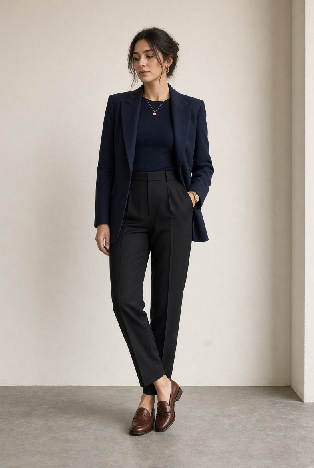
- Black trousers + white shirt + loafers
- Black trousers + colored blouse + flats
- Black trousers + sweater + blazer
- Black trousers + striped shirt + loafers
- Black trousers + fitted top + cardigan
Now rotate your shoes, bags, jewelry, and layers.
That way, the same trousers can feel different throughout the week.
Build Easy Weekend Outfits
Weekend clothes should feel comfortable but still look intentional.
Try:
- Jeans + T-shirt + sneakers
- Leggings + oversized shirt + sneakers
- Shorts + tank top + cardigan
- Joggers + fitted T-shirt + denim jacket
- Casual dress + sneakers
Then add one small accessory.
A watch, cap, tote bag, scarf, or simple necklace can make a relaxed outfit feel finished.
Make Your Basic T-Shirts Work Harder
Basic T-shirts often get ignored.
However, they may be the most useful pieces in your closet.
A white T-shirt can work with:
- Jeans
- Black trousers
- Shorts
- Skirts
- Under a blazer
- Under a cardigan
- Under a denim jacket
A black T-shirt can work with:
- Blue jeans
- White pants
- Beige trousers
- Printed skirts
- Denim skirts
- Layered jackets
So, never judge a piece only by how exciting it looks by itself.
Judge it by how many outfits it can help create.
Use Shoes to Change the Mood
Shoes can completely change the same clothing combination.
Consider a simple jeans-and-shirt outfit.
With sneakers, it feels casual.
With loafers, it feels smarter.
With ankle boots, it feels stronger.
With sandals, it feels lighter.
With heels, it can feel more dressed up.
Therefore, before buying another outfit, try changing your shoes.
You may already have more options than you realize.
How to Create Outfits From Clothes You Already Own With Accessories
Accessories are small, but they can make a major difference.
Try:
- Belts
- Scarves
- Bags
- Hats
- Watches
- Necklaces
- Earrings
- Bracelets
- Sunglasses
For example:
White shirt + jeans
can become:
White shirt + jeans + belt + loafers
Or:
White shirt + jeans + sneakers + tote bag
The main clothes stay the same.
The details change the look.
Try the Belt Trick
A belt can do more than hold your pants up.
It can also help shape an outfit.
Use a belt with:
- Loose dresses
- Long cardigans
- Oversized shirts
- High-waisted trousers
- Jeans
A belt can create a clear waist and give a loose outfit more shape.
However, choose a belt that works with your shoes or bag if you want a more connected look.
Create an Outfit Formula
An outfit formula is a simple combination that you know works.
For example:
Fitted top + wide pants + simple shoes
Or:
T-shirt + jeans + third layer
Or:
Dress + jacket + sneakers
Or:
Button-down + trousers + loafers
Once you find a formula you like, repeat the structure with different colors and clothes.
This is one of the easiest answers to how to create outfits from clothes you already own because you stop starting from zero every morning.
Use the 3 × 3 Wardrobe Challenge
Pick:
- 3 tops
- 3 bottoms
- 3 pairs of shoes
Now try to create as many combinations as possible.
Three tops multiplied by three bottoms gives nine basic combinations.
Then different shoes can change the mood.
You can also add jackets and accessories.
This small experiment can show you how powerful a simple wardrobe can be.
Create Outfits From Clothes You Forgot You Had
Many wardrobes contain hidden treasures.
Look at the back of your closet.
Check:
- Old jackets
- Special shirts
- Unused skirts
- Dresses
- Scarves
- Belts
- Shoes
- Bags
Ask yourself:
“Why have I stopped wearing this?”
Maybe the item needs a different combination.
For example, a skirt that feels too formal might work with a casual T-shirt and sneakers.
An old blazer might work with jeans.
A dress you considered too fancy might work with a denim jacket.
Try the “Wrong” Combination
Sometimes your best outfit comes from a combination that you normally would not try.
For example:
- Dress + sneakers
- Blazer + jeans
- Skirt + graphic T-shirt
- Button-down + shorts
- Sweater + dress
- Athletic pants + structured jacket
The goal is not to follow every fashion rule.
Instead, experiment and see what looks good on you.
How to Create Outfits From Clothes You Already Own Without Looking Repetitive
Repeating clothes is not a problem.
Repeating the exact same outfit every time can feel boring.
Therefore, change one element.
If you always wear:
Jeans + white T-shirt + sneakers
try:
- Add a blazer
- Change to boots
- Add a scarf
- Use a colorful bag
- Add a cardigan
- Tuck the shirt differently
- Wear a belt
- Add a necklace
The outfit remains familiar, but it feels new.
Fashion Revolution also encourages people to become comfortable with repeating favorite outfits and notes that clothes deserve to be worn more than once.
Create a Closet Outfit Chart
Use a simple chart to understand your wardrobe.
| Clothing Item | Casual | Work | Dinner | Weekend | Layering |
| White T-shirt | Excellent | Good | Good | Excellent | Excellent |
| Black trousers | Good | Excellent | Excellent | Good | Good |
| Blue jeans | Excellent | Good | Good | Excellent | Excellent |
| Blazer | Good | Excellent | Excellent | Good | Excellent |
| Cardigan | Excellent | Excellent | Good | Excellent | Excellent |
| Button-down | Excellent | Excellent | Good | Excellent | Excellent |
| Simple dress | Good | Good | Excellent | Excellent | Good |
| Sneakers | Excellent | Good | Good | Excellent | Good |
| Loafers | Good | Excellent | Excellent | Good | Good |
This chart helps you see which pieces have the most value.
A Real-Life Example: Maya’s 12-Piece Closet
Imagine Maya has only 12 main clothing pieces:
- 2 T-shirts
- 2 shirts
- 2 pairs of jeans
- 1 black trouser
- 1 skirt
- 1 dress
- 1 cardigan
- 1 blazer
- 1 denim jacket
At first, Maya thinks she needs new clothes.
Instead, she starts making combinations.
Her white T-shirt works with jeans, trousers, and the skirt.
Her shirts work with jeans and trousers.
Her blazer works with jeans, trousers, and the skirt.
Her denim jacket works with the dress, skirt, and jeans.
Soon, she has many outfit choices.
The lesson is simple: outfit variety does not always require wardrobe variety.
Case Study: Turning One Pair of Jeans Into Seven Looks
Consider another example.
A person owns one pair of straight-leg blue jeans.
Instead of buying another pair, they create seven outfits:
Monday: White T-shirt + jeans + sneakers.
Tuesday: Black blouse + jeans + ankle boots.
Wednesday: Button-down + jeans + loafers.
Thursday: Sweater + jeans + sneakers.
Friday: Blazer + T-shirt + jeans + loafers.
Saturday: Tank top + jeans + denim jacket.
Sunday: Cardigan + jeans + flats.
The jeans never changed.
The styling changed.
This is exactly why learning how to create outfits from clothes you already own can save both money and time.
Case Study: The Forgotten Dress
Imagine you have a dress that you bought for a special event.
You wore it once.
Now it sits in the closet.
Instead of leaving it there, try three casual versions.
Look one
Dress + denim jacket + sneakers.
Look two
Dress + cardigan + flats.
Look three
Sweater over dress + ankle boots.
Suddenly, your “special occasion dress” becomes an everyday piece.
This idea works especially well with simple dresses.
Advantages of Reusing Your Existing Clothes
There are many benefits.
You save money
You do not need to buy something every time you want a different look.
You save time
Once you know your outfit formulas, getting dressed becomes easier.
You reduce clutter
You can use what you already have instead of adding more.
You discover your style
Experimenting helps you learn what colors, shapes, and combinations you enjoy.
You reduce unnecessary shopping
The US Environmental Protection Agency recommends reducing, reusing, and repairing items as ways to reduce waste.
You make better purchases
When you understand your wardrobe, you can see what you actually need.
Disadvantages and Common Problems
Reusing your clothes also has a few challenges.
You may feel bored
Wearing familiar clothing can sometimes feel repetitive.
Solution: change layers, shoes, accessories, or styling.
Some clothes may no longer fit your lifestyle
A piece may look nice but not work for your daily life.
Solution: consider tailoring, swapping, selling, donating, or repurposing it.
You may lack basic pieces
Sometimes you truly do need one or two missing items.
Solution: identify the exact gap before shopping.
Some clothing may be damaged
A torn seam or missing button can stop you from wearing something.
Solution: repair it when practical.
The EPA also recommends repairing clothing instead of throwing it away when possible.
Expert Advice: Think in Outfits, Not Individual Items
A useful styling habit is to stop thinking only about individual clothes.
Instead, think about complete outfits.
When you look at a shirt, do not ask:
“Do I like this shirt?”
Also ask:
“What can I wear with this shirt?”
A simple item that works with ten other pieces may be more useful than a beautiful item that works with only one outfit.
That is an important idea for building a practical wardrobe.
Expert Advice: Photograph Your Best Outfits
When you create an outfit you love, take a photo.
Keep those photos in a folder on your phone.
You can call the folder:
“Outfit Ideas.”
Then, when you feel like you have nothing to wear, look through it.
Fashion Revolution specifically suggests photographing favorite outfits to create a personal catalog of looks.
This simple habit can save you a lot of morning stress.
How to Create Outfits From Clothes You Already Own for Travel
Travel requires smart packing.
Start with a small color group.
For example:
Black + white + denim + one accent color
Then pack pieces that work together.
A travel capsule could include:
- 2 T-shirts
- 1 button-down
- 1 sweater
- 2 bottoms
- 1 dress
- 1 jacket
- 2 pairs of shoes
Now you can mix the pieces.
For example:
Day one: Jeans + T-shirt + sneakers.
Day two: Trousers + button-down + loafers.
Day three: Dress + jacket + sneakers.
Day four: Jeans + sweater + boots.
This approach reduces the amount you need to pack.
Build a Date-Night Outfit Without Shopping
You do not always need a new outfit for dinner or a date.
Start with one piece that feels special.
For example:
Black dress + heels + simple jewelry
Or:
Jeans + nice blouse + boots
Or:
Black trousers + fitted top + blazer
Then add one accessory.
A small bag, earrings, belt, or watch can make the outfit feel more polished.
Make Casual Clothes Look More Polished
Sometimes casual clothes can look messy because there is no clear structure.
You can improve them with simple changes.
Try:
- Tucking your shirt
- Adding a belt
- Choosing cleaner shoes
- Rolling sleeves
- Adding a jacket
- Matching your bag and shoes
- Keeping accessories simple
For example:
T-shirt + jeans
can become:
Tucked T-shirt + jeans + belt + loafers + structured bag
The clothes are still simple.
The styling is simply more intentional.
Use Proportion to Improve an Outfit
Proportion means thinking about how clothing shapes work together.
For example:
Wide pants + fitted top
often creates balance.
Another option:
Slim jeans + oversized sweater
also creates balance.
You can also use a cropped jacket with high-waisted trousers.
The goal is not to follow a strict rule.
Instead, look in the mirror and ask:
“Does the outfit feel balanced?”
Use the Front, Side, and Back Mirror Check
When testing a new outfit, do not only look from the front.
Check:
- Front
- Side
- Back
This helps you see how the clothing falls.
It also helps you notice whether a shirt bunches up or whether a jacket sits well.
You can then make small changes.
Try a tuck, belt, layer, or different shoe.
Create a Seven-Day Outfit Plan
Planning your outfits can make your wardrobe feel larger.
For example:
| Day | Outfit |
| Monday | T-shirt + trousers + blazer |
| Tuesday | Jeans + shirt + sneakers |
| Wednesday | Dress + cardigan + flats |
| Thursday | T-shirt + skirt + denim jacket |
| Friday | Jeans + blouse + loafers |
| Saturday | Shorts + shirt + sneakers |
| Sunday | Sweater + jeans + boots |
You can then repeat the same pieces in different combinations the following week.
This is a simple way to make your wardrobe work harder.
Stop Saving Your Favorite Clothes
Many people keep their best clothes for “special” days.
However, clothes are meant to be worn.
If you love a jacket, wear it.
If you love a dress, style it casually.
If you have a beautiful shirt, do not let it sit in the back of the closet.
Fashion Revolution promotes longer use of clothing and highlights wearing and caring for clothes already in your wardrobe as an important part of more responsible fashion.
Your favorite clothes should be part of your normal life.
How to Create Outfits From Clothes You Already Own Without Buying More
Before you shop, follow this five-step rule:
Step 1: Pick one item
Choose something you want to wear.
Step 2: Find three matching pieces
Look for different tops, bottoms, or layers.
Step 3: Try three shoe options
Do not stop at the first pair.
Step 4: Add one accessory
Try a belt, bag, scarf, or jewelry.
Step 5: Take a photo
Save the outfit if you like it.
This process can turn a frustrating morning into a simple styling game.
What to Do When an Outfit Still Feels Wrong
Sometimes you create a combination and it simply does not work.
That is normal.
Do not immediately blame the clothes.
Change one thing at a time.
First, change the shoes.
If that does not help, change the top.
Then try a different jacket.
Then change the accessory.
This helps you discover exactly what feels wrong.
You do not need to replace the entire outfit.
When You Actually Should Buy Something New
Using your existing clothes does not mean you can never shop.
Sometimes a new item makes sense.
However, buy it because you have identified a real gap.
For example:
You may have five casual tops but no simple black trousers.
You may have many dresses but no comfortable everyday shoes.
You may have lots of summer clothes but no useful light jacket.
Before buying, ask:
- Can I create this outfit with what I own?
- Do I already own something similar?
- Can I wear the new item with at least three things?
- Will I wear it often?
- Does it fit my real lifestyle?
If the answers are mostly yes, the purchase may be useful.
The Final Wardrobe Reset
Now it is time to put everything together.
Take one afternoon and create a simple wardrobe reset.
Step 1: Remove clothes you never wear
Put them into a separate pile.
Step 2: Find your favorites
These become your starting pieces.
Step 3: Find your best basics
Look for jeans, plain tops, trousers, jackets, and simple dresses.
Step 4: Create outfit combinations
Make at least ten complete looks.
Step 5: Photograph them
Save the photos.
Step 6: Find your missing basics
Only now should you consider shopping.
Step 7: Repair useful damaged pieces
A small repair can bring a good item back into use.
Step 8: Pass on clothes you truly do not need
Donate, sell, swap, or recycle them where suitable.
The EPA notes that gently worn clothing and shoes can often be donated, while damaged items may require checking with local charities or recycling programs.
Frequently Asked Questions
- How to create outfits from clothes you already own when you feel like you have nothing to wear?
Start with one favorite piece. Then try three different tops, bottoms, layers, or shoes with it. Take photos of combinations that work.
- Can I make new outfits without buying clothes?
Yes. Change the way you combine your existing pieces. Layers, shoes, accessories, and different color combinations can create completely different looks.
- How many outfits can I make from a small wardrobe?
You can create many outfits from a small wardrobe if your clothes mix well. Even a few tops and bottoms can create numerous combinations.
- How do I make old clothes look new?
Change how you style them. Add a jacket, belt, scarf, different shoes, or new accessories. You can also wear a dress as a layered piece.
- What should I do with clothes I never wear?
First, ask why you do not wear them. If the item needs repair or tailoring, fix it. If it no longer suits you, consider selling, swapping, donating, or recycling it.
- How do I style basic T-shirts?
Wear them with jeans, trousers, skirts, shorts, jackets, cardigans, or blazers. You can also change the look with shoes and accessories.
- How do I make jeans look different?
Change the top, shoes, jacket, and accessories. Jeans can look casual with sneakers or more polished with loafers and a blazer.
- How can I create more outfits with one dress?
Wear the dress alone, then try a cardigan, denim jacket, blazer, sweater, belt, boots, sneakers, or flats.
- How can I stop wearing the same outfit every week?
Keep the main clothing pieces but change one or two details. Switch shoes, jackets, accessories, or the way you tuck your shirt.
- What colors are easiest to mix?
Black, white, cream, beige, gray, navy, brown, and denim are easy starting colors. You can then add brighter colors.
- Should all my clothes match?
No. Your clothes do not need to match perfectly. They only need to work well together.
- How do I make an outfit look more stylish?
Focus on balance, color, fit, layers, and accessories. Often, a small change can make a simple outfit look much better.
- Is repeating outfits okay?
Absolutely. Repeating outfits can help you get more use from your clothes. You can repeat a favorite outfit and change small details when you want variety.
- How do I create work outfits from casual clothes?
Start with a polished layer such as a blazer or cardigan. Then use trousers, clean shoes, a button-down shirt, or simple accessories.
- How do I create outfits for a date without shopping?
Choose a piece you already feel confident wearing. Then add polished shoes, a nice layer, and simple accessories.
- How can I make an oversized shirt look better?
Try pairing it with slimmer pants, straight jeans, leggings, or fitted bottoms. You can also tuck or partially tuck the shirt.
- What is the easiest outfit formula?
A simple formula is top + bottom + third piece. For example, T-shirt + jeans + jacket.
- Should I photograph my outfits?
Yes. Outfit photos create a personal style library. They can also help you remember combinations that looked good.
- How do I know if I really need new clothes?
First, check whether you can create the desired outfit with what you own. If you cannot, identify the exact missing item rather than buying several random pieces.
- What is the biggest mistake people make with their wardrobe?
One major mistake is assuming that a full closet automatically gives you good outfits. The real value comes from how well your clothes work together.
External Resources for Better Wardrobe Choices
If you want to learn more about wearing, repairing, reusing, and caring for clothes, these resources can help:
- Fashion Revolution — Consumption and wardrobe ideas — Includes practical ideas such as outfit repeating, borrowing, renting, and getting more use from clothing.
- Fashion Revolution — Taking Action on Fashion and the Climate Crisis — Offers ideas for extending the life of clothes and making more thoughtful wardrobe choices.
- U.S. EPA — What You Can Do About Climate Change: Waste — Explains reduce, reuse, repair, and other ways to reduce waste.
- U.S. EPA — How Do I Recycle Common Recyclables? — Provides guidance on donating and handling unwanted clothing and shoes.
- Fashion Revolution — Mend in Public Day — Provides repair and mending ideas for giving older clothing a longer life.
Final Thoughts
Learning how to create outfits from clothes you already own can completely change the way you see your wardrobe.
You may discover that you do not need another shopping trip.
Instead, you may need a new combination.
Start with your favorite clothes. Then mix colors, change layers, try different shoes, and use accessories. Also, experiment with pieces that you have not worn for months.
Most importantly, do not worry about creating a perfect outfit every time.
Fashion should be fun.
Your closet does not need to look like a store. It needs to work for your real life.
A white shirt can become casual, smart, relaxed, or polished. A pair of jeans can work for a weekend, dinner, work, or travel. A simple dress can become an everyday outfit with sneakers and a jacket.
Therefore, before you buy something new, look at what you already own.
How to create outfits from clothes you already own is really about seeing familiar clothes with fresh eyes.
And once you learn that skill, your wardrobe can feel bigger, your mornings can feel easier, and your shopping list can become much shorter.