
Wrapped Indian Garment: Discover the Beauty and Tradition of Sarees and More

Wrapped Indian garment is a traditional piece of clothing, like a saree or dhoti, that you wrap around your body without much stitching. These garments are a big part of Indian culture. For centuries, people in India have worn them for festivals, weddings, and everyday life. They’re colorful, elegant, and full of history. In this article, we’ll dive into the world of wrapped Indian garments, exploring their types, how to wear them, and why they’re still so popular today. Whether you’re new to Indian fashion or a fan, you’ll learn something exciting!
The History of Wrapped Indian Garment
Wrapped Indian garments have been around for thousands of years. Ancient texts, like the Vedas, mention people wearing draped clothes as early as 3000 BCE. Back then, both men and women wore simple pieces of fabric wrapped around their bodies. These garments were practical because they suited India’s hot climate. Plus, they were easy to make from cotton, silk, or other local materials.
As time passed, these garments became more than just clothing. They started to show a person’s status, region, and even their job. For example, a richly decorated saree might be worn by someone wealthy, while a simple cotton dhoti was common for farmers. Today, wrapped Indian garments are still a symbol of tradition and pride.
Types of Wrapped Indian Garments
There are many kinds of wrapped Indian garments, each with its own style and story. Let’s look at the most popular ones.
The Saree: Queen of Wrapped Indian Garments
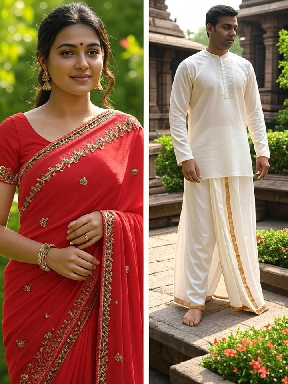
The saree is the most famous wrapped Indian garment. It’s a long piece of fabric, usually 5 to 9 yards, that you wrap around your waist and drape over your shoulder. Sarees come in countless colors, patterns, and materials like cotton, silk, or chiffon. For example, a Banarasi saree from Varanasi is known for its shiny gold and silver threads, while a Kanjivaram saree from Tamil Nadu is famous for its bright colors.
Sarees are super versatile. You can wear them for casual events or fancy weddings. Plus, there are many ways to drape a saree, depending on where you’re from. For instance, in Bengal, women wear the saree with pleats in the front, while in Gujarat, the pleats go over the shoulder in a different style.
The Dhoti: A Timeless Wrapped Indian Garment for Men
The dhoti is another popular wrapped Indian garment, mostly worn by men. It’s a rectangular piece of cloth, usually cotton, that you wrap around your waist and legs. Dhotis are cool and comfortable, perfect for India’s warm weather. They’re often worn for religious events or festivals, but some men wear them daily, especially in rural areas.
Interestingly, dhotis are also worn by women in some regions, like Rajasthan, where they’re called “dhoti sarees.” A famous example is Mahatma Gandhi, who wore a simple white dhoti to show his support for Indian-made cloth during the freedom movement.
The Lungi: A Casual Wrapped Indian Garment
The lungi is a shorter, more casual wrapped Indian garment. It’s like a dhoti but often more colorful and worn at home or for informal occasions. Men in South India, like Tamil Nadu and Kerala, love lungis for their comfort. You can fold a lungi in half and tie it like a sarong or wear it full-length.
Other Wrapped Indian Garments
There are other wrapped garments too, like the mundu (a white dhoti-like garment from Kerala) and the churidar (a loosely draped trouser). Each region in India has its own version, making the world of wrapped Indian garments super diverse.
Why Are Wrapped Indian Garments So Special?
Wrapped Indian garments are special for many reasons. First, they’re super flexible. You can adjust the way you drape them to suit your style or body shape. Second, they’re often handmade, with beautiful patterns like embroidery or block printing. For example, a handwoven Pochampally saree from Telangana has unique geometric designs that take weeks to make.
Another reason is their cultural meaning. Wrapped Indian garments are worn during big moments, like weddings or religious ceremonies. They connect people to their roots. Plus, they’re eco-friendly because they use natural fabrics like cotton or silk, which are better for the environment than synthetic clothes.
How to Wear a Wrapped Indian Garment
Wearing a wrapped Indian garment might seem tricky at first, but it’s easier than you think. Let’s break it down with a focus on sarees and dhotis.
How to Drape a Saree
- Start with the basics: Wear a blouse and a petticoat (a skirt-like undergarment).
- Tuck the saree: Take one end of the saree and tuck it into the petticoat at your waist.
- Make pleats: Gather the saree into neat folds (pleats) and tuck them into the waistband.
- Drape over the shoulder: Take the loose end (called the pallu) and drape it over your shoulder.
- Adjust for comfort: Make sure the saree feels secure and looks neat.
There are over 80 ways to drape a saree! For example, the Nivi style from Andhra Pradesh is the most common, with pleats in front and the pallu over the shoulder. You can watch tutorials on YouTube for step-by-step guides.
How to Wear a Dhoti
- Wrap around the waist: Hold the dhoti like a towel and wrap it around your waist.
- Tie a knot: Pull the ends tight and tie a knot at the front.
- Create pleats: Fold the fabric through your legs and tuck it in at the back for a secure fit.
- Adjust the length: Make sure the dhoti reaches your ankles or just above.
It takes practice, but once you get the hang of it, it’s quick and easy. Websites like Cultural India have great tips for beginners.
Real-Life Example: A Wedding with Wrapped Indian Garments
Let’s talk about Priya, a 28-year-old from Mumbai. Last year, she got married and chose a stunning red Banarasi saree as her wedding outfit. The saree was a wrapped Indian garment passed down from her grandmother, making it extra special. Priya spent weeks learning to drape it perfectly for the big day. She paired it with gold jewelry and felt like a queen. Her guests couldn’t stop complimenting her, and the saree’s intricate designs sparkled under the wedding lights. Priya’s story shows how a wrapped Indian garment can make any moment unforgettable.
Case Study: The Revival of Handwoven Sarees
In recent years, handwoven sarees, a type of wrapped Indian garment, have made a big comeback. Take the case of WeaverStory, a small business in India that works with artisans to create handwoven sarees. In 2020, they started selling online and saw a 200% increase in sales within a year. Why? People wanted unique, sustainable clothes instead of mass-produced ones. WeaverStory’s sarees, made with traditional techniques like block printing, became a hit among young women in cities like Delhi and Bangalore. This shows how wrapped Indian garments are staying relevant in modern times. You can read more about their work on WeaverStory’s website.
Modern Trends in Wrapped Indian Garments
Today, wrapped Indian garments are not just for traditional events. Designers are mixing old styles with new ideas. For example, some sarees now come with pre-stitched pleats, making them easier to wear. Others have trendy prints, like floral or abstract designs, that appeal to younger people.
Celebrities are also rocking wrapped Indian garments. Bollywood star Deepika Padukone often wears sarees at red-carpet events, showing the world how stylish they can be. Meanwhile, men like actor Ranveer Singh have made dhotis cool again by pairing them with modern jackets.
Chart: Popular Wrapped Indian Garments and Their Features
|
Garment |
Region |
Material |
Occasion |
Unique Feature |
|---|---|---|---|---|
|
Saree |
All India |
Cotton, Silk |
Weddings, Festivals |
Many draping styles |
|
Dhoti |
North/South India |
Cotton |
Religious Events, Daily Wear |
Comfortable and airy |
|
Lungi |
South India |
Cotton, Synthetic |
Casual, Home Wear |
Bright colors, easy to tie |
|
Mundu |
Kerala |
Cotton |
Festivals, Daily Wear |
White with gold border |
FAQs About Wrapped Indian Garments
What is a wrapped Indian garment?
A wrapped Indian garment is a piece of cloth, like a saree or dhoti, that you drape around your body without much sewing.
How long does it take to learn to wear a saree?
With practice, most people can learn to drape a saree in about 10-15 minutes. Online tutorials can help speed things up!
Are wrapped Indian garments comfortable?
Yes! They’re made from breathable fabrics like cotton, which are perfect for warm weather and feel light on the skin.
Can men and women both wear wrapped Indian garments?
Absolutely! Sarees are mostly for women, but dhotis and lungis are popular for men. Some women also wear dhoti-style sarees.
Where can I buy a wrapped Indian garment?
You can buy them at local stores in India or online at sites like Amazon India or Myntra.
Conclusion
Wrapped Indian garment, like sarees, dhotis, and lungis, are more than just clothes—they’re a piece of India’s heart and history. From ancient times to modern runways, these garments have stayed popular because of their beauty, comfort, and meaning. Whether you’re dressing up for a wedding or keeping it casual at home, a wrapped Indian garment is a perfect choice. So, why not try one? You might just fall in love with the way it makes you feel—elegant, connected, and totally stylish!