
Traditional Garment for a Scottish Groom: Your Guide to Kilt Perfection

Traditional garment for a Scottish groom is a kilt, a symbol of Scottish pride, heritage, and style. For many grooms in Scotland, wearing a kilt on their wedding day is a way to honor their culture. However, choosing the perfect outfit can feel overwhelming. Therefore, this guide will explain everything you need to know about the traditional Scottish groom’s attire in simple words. Moreover, we’ll cover styles, accessories, and tips to make your big day special.
What Is the Traditional Garment for a Scottish Groom?
The traditional garment for a Scottish groom is called a kilt outfit. A kilt is a knee-length skirt-like garment made of tartan fabric. Tartan is a patterned cloth with colorful checks and stripes. Each pattern, or “tartan,” often represents a specific Scottish clan or family. For example, the MacLeod clan has a yellow and black tartan, while the Campbell clan has a green and blue one.
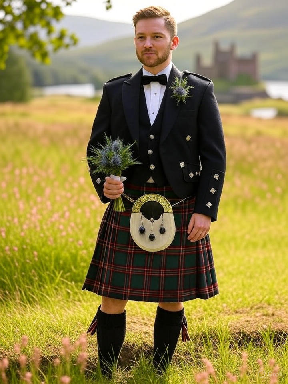
Besides the kilt, the groom’s outfit includes several other pieces. These include a jacket, a sporran (a pouch worn at the waist), a shirt, a tie or cravat, socks, shoes, and sometimes a sgian-dubh (a small knife tucked into the sock). Together, these items create a complete and polished look.
Why Wear a Traditional Scottish Kilt?
Wearing a kilt is more than just following tradition. First, it connects the groom to his Scottish roots. Second, it makes the wedding unique and memorable. For instance, guests often love seeing the bright tartan patterns and the formal yet fun style of the kilt. Additionally, kilts are comfortable and versatile. Unlike tight suits, kilts allow freedom of movement, which is great for dancing at the reception!
History of the Traditional Garment for a Scottish Groom
The kilt has a long history in Scotland. In fact, it dates back to the 16th century. Back then, Highlanders wore a “great kilt,” a large piece of fabric wrapped around the body. However, by the 18th century, the modern kilt, shorter and easier to wear, became popular. Despite being banned after the 1745 Jacobite Rebellion, the kilt survived and became a symbol of Scottish identity.
Today, the kilt is worn for special occasions like weddings, ceilidhs (Scottish dances), and Highland games. Therefore, choosing a kilt for your wedding is a way to celebrate this rich history.
Types of Kilts for a Scottish Groom
There are different types of kilts to choose from. Here are the most popular ones:
- Traditional Tartan Kilt
This is the classic kilt made from tartan fabric. Grooms often choose a tartan linked to their clan. For example, if your last name is Stewart, you might wear the Royal Stewart tartan, which is red with black and white stripes. If you don’t have a clan tartan, you can pick a universal tartan like Black Watch.
- Modern Kilt
Modern kilts are less formal and may use non-tartan fabrics like leather or denim. However, for weddings, most grooms stick to tartan kilts for a traditional look.
- Utility Kilt
Utility kilts are casual and have pockets for everyday use. These are not ideal for weddings because they lack the formal style needed for such events.
Choosing the Right Tartan for Your Kilt
Selecting the right tartan is a big decision. Here’s how to do it:
- Clan Tartan: If you know your family’s clan, visit the Scottish Register of Tartans to find your tartan.
- Regional Tartan: If you don’t have a clan, choose a tartan from your region, like Lothian or Highlands.
- Universal Tartan: Tartans like Black Watch or Pride of Scotland are open to anyone.
- Partner’s Tartan: Some grooms wear their bride’s clan tartan to show unity.
For example, James, a groom from Edinburgh, chose the MacGregor tartan because it was his mother’s clan. His wife, Fiona, loved the red and green pattern, and it matched the wedding’s color theme.
Essential Accessories for the Traditional Garment for a Scottish Groom
A kilt is just one part of the outfit. Below are the must-have accessories:
- Sporran
The sporran is a small pouch worn at the waist. Since kilts don’t have pockets, the sporran holds items like keys or a wallet. There are three types:
- Day Sporran: Simple and made of leather.
- Dress Sporran: Fancy, often with fur or metal details.
- Semi-Dress Sporran: A mix of both, perfect for weddings.
- Jacket
The groom usually wears a short jacket, like a Prince Charlie or an Argyll jacket. The Prince Charlie is more formal, with tails and shiny buttons. Meanwhile, the Argyll is simpler and great for daytime weddings.
- Shirt and Tie
A white dress shirt is standard. For the tie, you can choose a bow tie, a cravat (a fluffy necktie), or a regular tie in a color that matches your tartan.
- Kilt Hose (Socks)
Kilt hose are knee-high socks. They can be plain or have patterns. For weddings, cream or white socks look best. Additionally, you’ll need garters (small straps) to keep the socks up.
- Ghillie Brogues
These are traditional leather shoes with long laces that wrap around the ankles. They’re comfortable and stylish.
- Sgian-Dubh
The sgian-dubh is a small knife tucked into the sock. It’s more decorative than functional today. However, check with your venue, as some places don’t allow knives.
- Kilt Pin
A kilt pin is a small brooch that adds weight to the kilt’s front flap to keep it in place. It also adds a touch of style.
How to Wear a Kilt Properly
Wearing a kilt the right way is important. First, make sure the kilt is the right length—it should reach the top of your knee. Next, the pleats should be at the back, and the flat part (called the apron) at the front. Also, the sporran should hang centered over the apron. Finally, stand tall and confident to show off your outfit!
For example, at a wedding in Glasgow, groom Andrew struggled with his kilt at first. However, with help from his best man, he learned to adjust the straps and wear it perfectly. As a result, he felt proud and comfortable all day.
Case Study: A Real-Life Scottish Wedding
Let’s look at a real-life example. In 2023, David and Emma got married in the Highlands. David wanted to wear a traditional garment for a Scottish groom to honor his heritage. He chose the Gordon tartan, which has navy blue and green colors, because it was his grandfather’s clan. His outfit included a Prince Charlie jacket, a dress sporran, and ghillie brogues.
Emma’s dress had a sash in the same Gordon tartan, creating a unified look. David’s groomsmen also wore kilts in a neutral tartan to complement the couple. Guests loved the traditional vibe, and the photos looked stunning against the mountain backdrop. David said, “Wearing a kilt made me feel connected to my family and Scotland. Plus, it was so comfortable for dancing!”
Renting vs. Buying a Kilt Outfit
Should you rent or buy your kilt? Here’s a comparison:
|
Option |
Pros |
Cons |
|---|---|---|
|
Renting |
Cheaper, no storage needed, easy for one-time use |
Limited tartan choices, may not fit perfectly |
|
Buying |
Perfect fit, reusable, keepsake for future events |
Expensive, needs storage space |
For example, if your wedding budget is tight, renting from a shop like Kinloch Anderson is a great option. However, if you plan to wear a kilt again for events, buying one is worth it.
Tips for Choosing Your Traditional Garment for a Scottish Groom
Here are some simple tips to make your kilt outfit perfect:
- Start Early: Order or rent your kilt at least three months before the wedding to avoid stress.
- Get Measured: Visit a kilt shop for accurate measurements. A well-fitted kilt looks amazing.
- Match the Theme: Coordinate your tartan with the wedding colors or your partner’s outfit.
- Practice Wearing It: Try your kilt on before the big day to feel comfortable.
- Check the Weather: If it’s cold, add a tweed jacket or a plaid (a long piece of tartan worn over the shoulder).
Common Mistakes to Avoid
Even with the best intentions, grooms can make mistakes. For instance, wearing a kilt too long or too short looks sloppy. Similarly, choosing a sporran that’s too casual can ruin the formal look. Additionally, don’t forget to iron your shirt and polish your shoes. Finally, avoid wearing underwear with a kilt—it’s tradition to go “true Scotsman” (but it’s optional!).
FAQs About the Traditional Garment for a Scottish Groom
- What is the traditional garment for a Scottish groom?
The traditional garment is a kilt made of tartan fabric, worn with a jacket, sporran, socks, shoes, and other accessories.
- Do I have to wear my clan’s tartan?
No, you can choose any tartan, like a universal one or your partner’s clan tartan.
- Is it okay to rent a kilt for my wedding?
Yes, renting is a popular and affordable option, especially if you only need it once.
- What shoes go with a kilt?
Ghillie brogues are the traditional shoes, but polished black dress shoes work too.
- Can non-Scots wear a kilt?
Absolutely! Anyone can wear a kilt to celebrate Scottish culture.
Conclusion
The traditional garment for a Scottish groom is a kilt outfit that blends history, style, and pride. From choosing the right tartan to picking accessories like a sporran and ghillie brogues, every detail matters. Moreover, with the tips and examples in this guide, you can create a look that’s perfect for your wedding day. So, embrace the tradition, stand tall, and enjoy your special moment in a kilt!